
Early morning mountain campsite with portable power station and dog by a river

Portable Power Stations: What the Spec Sheet Doesn't Tell You. Here's How to Figure Out What You Actually Need.

Research NotesCommunity Opinions4 Price TiersBuyer Scorecard
Tania Chinfatt
Tania Chinfatt

Editor, Unicorns On Clouds

Published 2026-04-16 · Updated 2026-04-16· 14 min read

As an Amazon Associate I earn from qualifying purchases. Some product links on this page are affiliate links; if you buy through them, we may earn a small commission at no extra cost to you.

Portable Power Stations: What the Spec Sheet Doesn't Tell You. Here's How to Figure Out What You Actually Need.

The number on the box is not always the number you will use. A unit rated 1000Wh can deliver less at the AC outlet after inverter losses. A unit advertised by peak watts may sustain much less continuously. This guide separates the headline numbers from the specs that actually size your setup.

Three spec gaps trip up most buyers in this category. First: rated Wh versus usable Wh. Every lithium pack loses some energy through inverter conversion. Better units usually publish usable-capacity or efficiency data; cheaper listings often do not. Second: rated watts versus continuous watts. Peak ratings are for short bursts, not sustained appliances. Third: LiFePO4 claims on units that are implausibly light. Weight is not proof by itself, but it is a reason to verify the chemistry.

Buy for a realistic hard day, not your average Tuesday. That means knowing what you need to run, for how long, and whether you can recharge before things get critical. The capacity table below gives you that number in three steps.
How to Calculate the Minimum Wh You Actually Need

Formula: (Running watts x Hours needed) / Inverter efficiency x 1.2 buffer = Minimum Wh

DeviceRunning WattsHoursMin Wh (with buffer)
Mini fridge150W8h1,600Wh
Full-size fridge200W12h2,667Wh
CPAP machine30W8h320Wh
LED lantern + phone20W10h267Wh
Laptop (65W)65W4h347Wh

Uses a 90% inverter-efficiency assumption and a 20% buffer. Treat these as planning estimates, not guarantees. Check your device labels, starting watts, battery settings, and whether features like CPAP humidification are enabled.

Camping and Travel: When You Don't Need a Power Station

The honest answer for most weekend campers is that you probably do not need one. A charged headlamp lasts weeks. A 20,000mAh power bank handles three or four full phone charges and costs $30. If your camping reality is two nights with a cooler full of ice, a small power bank covers everything.

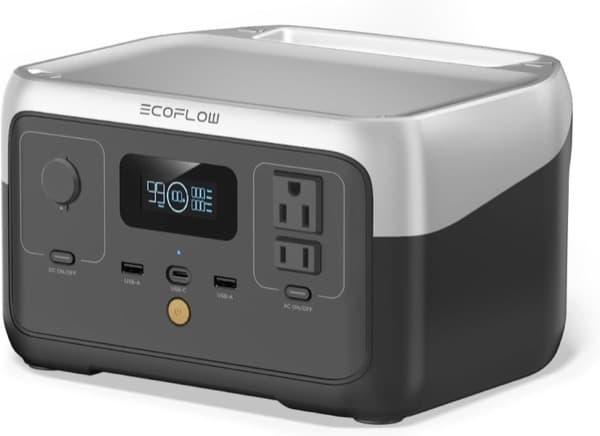
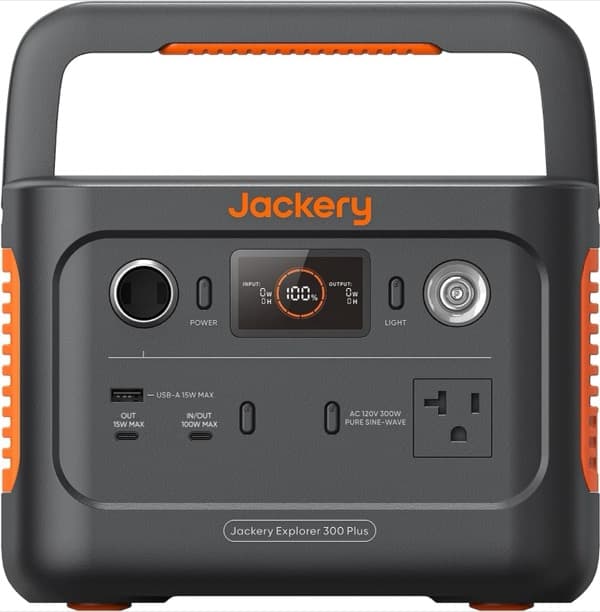
The 256-288Wh tier earns its keep on longer trips, for overnight CPAP use, or when you want to run a 12-volt fan without a gas generator. The EcoFlow RIVER 2 is a compact LiFePO4 entry point; check current seller pricing and review count before buying. The Jackery 300 Plus is listed at 3.75kg and uses LiFePO4 cells.

Neither is the right tier for appliance backup. A device that averages 150W over 8 hours needs roughly 1,333Wh before buffer. Compressor cycling can lower average draw, but startup surge still matters.

Campsite at golden hour with portable power station powering string lights

Power Where the Grid Ends

Cold drinks. Charged phone. String lights at the campsite. The right station can make a weekend trip easier.

Browse Camping Stations →

Background

Why LiFePO4 Chemistry Matters

LiFePO4 (lithium iron phosphate) is generally known for better thermal stability and longer cycle life than many NMC lithium-ion packs, but exact thresholds and cycle ratings depend on the cell and battery-management system. At one full cycle per day, a 3,000-cycle rating would be about 8 years in simple calendar math before reaching the manufacturer's stated end-of-life threshold. The tradeoff: LiFePO4 packs usually weigh more per Wh than NMC, so unusually light LiFePO4 claims deserve a closer spec check. Sources: Battery University.

Weekend Backup: The 1000Wh Sweet Spot

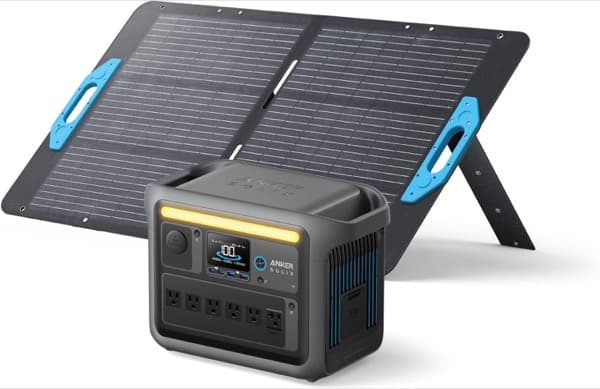
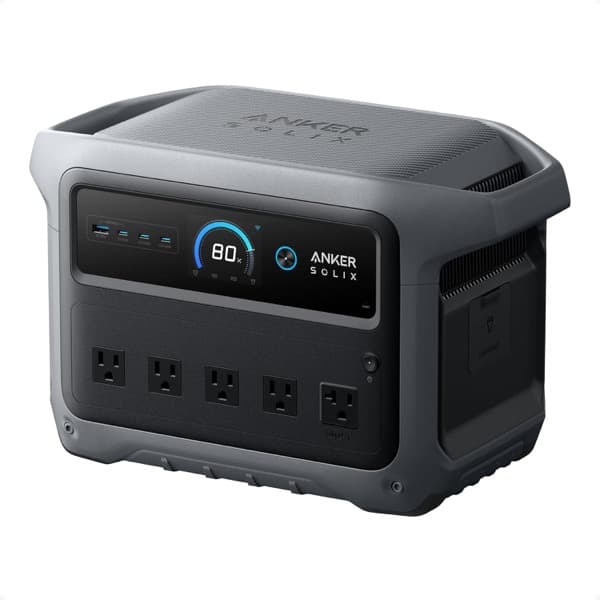
The Anker SOLIX C1000 Gen 2 was the most interesting mid-size unit we checked at publication because multiple deal sites covered a sharp price drop. Prices move quickly, so verify the current listing before treating this as a live deal. The published specs list 1024Wh of LiFePO4 capacity, 2000W continuous output, a 49-minute wall-charge claim, and ten ports across AC, USB-C, USB-A, and DC.

App controls and battery monitoring come up repeatedly in buyer reviews. Some owners use this as backup for desktops and routers with pass-through charging, but you should verify UPS behavior and transfer-time requirements for your exact device before relying on it for sensitive equipment.

What 1024Wh can handle depends on real draw. It may cover a mini fridge for a few hours, device charging for a weekend, or a low-draw CPAP setup overnight. Humidifiers, heated tubes, compressor startup, cold weather, and inverter losses change the math. Check your appliance labels before assuming this tier covers your scenario.

Want to score this unit against the framework above? Jump to the 8-criterion scorecard. Battery chemistry: LiFePO4 per Anker's published specs. Continuous output: 2000W listed. Charge speed and solar input should be checked against the current seller page and manual.

Anker SOLIX C1000 Gen 2

Anker SOLIX C1000 Gen 2

Anker

Capacity1024Wh
Output2000W
Weight12.5kg
$428.99Amazon

The 8-Criterion Buyer's Scorecard

Pull up any listing. Score each criterion from 0 to 10 against the column below. Multiply each score by the weight percentage. Add the total. A solid mid-range unit lands 55-70 out of 100. Below 40 is a problem. Most brands publish enough specs to score six criteria from the product page alone. Listings that omit key specs give you less to evaluate, which itself is useful information.

CriterionWeightWhat a 10 looks like
Battery chemistry & cycle life22%Full chemistry disclosed, not just "lithium-ion." LiFePO4 units should publish cycle rating and capacity-retention assumptions. Bonus points for disclosed cell supplier and thermal/safety documentation.
Continuous AC output power20%Pure sine wave inverter with both continuous and peak ratings published. Continuous output should match the appliances you plan to run, and surge rating should be disclosed separately.
Usable capacity (real Wh vs. rated Wh)18%Usable Wh or inverter-efficiency data published by the manufacturer or measured by a reputable tester. Rated Wh should be traceable to cell voltage and amp-hours, not only a rounded marketing number.
Charge speed (wall + solar)14%Wall-charge time, solar-charge limits, and voltage range published clearly. For larger units, MPPT solar input and simultaneous charge/use behavior should be documented in the manual.
Solar input capability10%MPPT confirmed, max solar input and voltage window published, and connector requirements clear. Third-party panel compatibility is a plus if voltage and connector requirements match.
Safety certifications8%UL 2743, ETL, CSA, or other verifiable third-party safety listing where applicable, plus transport and EMI documentation. Do not treat a CE mark alone as equivalent to a North American NRTL listing.
Port variety & output flexibility5%At minimum: 2 AC outlets (pure sine wave), 1 USB-C PD at 100W+, 2 USB-A QC3.0+, 1 12V DC car port. Ports share total inverter wattage sensibly. Pass-through charging supported.
Weight-to-capacity ratio3%Above 80 Wh/kg (1000Wh unit under 12.5 kg). LiFePO4 units typically land 60-90 Wh/kg. Handle or wheels provided for units above 15 kg. Spec sheet lists both gross and net weight.
Total100%Good mid-range = 55-70 · Strong = 70-80 · Infrastructure-grade = 80+

Pay Attention

Surge Watts vs. Running Watts: The Fridge Compressor Problem

Fridge compressors and power tools can draw several times their running wattage during startup. A 150W mini fridge may demand much more for a short moment when the compressor kicks on. A unit rated 800W continuous / 1600W peak is more likely to handle that startup than a unit with only a vague peak-watt headline, but the exact result depends on the appliance and inverter. If the spec sheet only lists peak watts, keep looking for the continuous rating before sizing your setup.

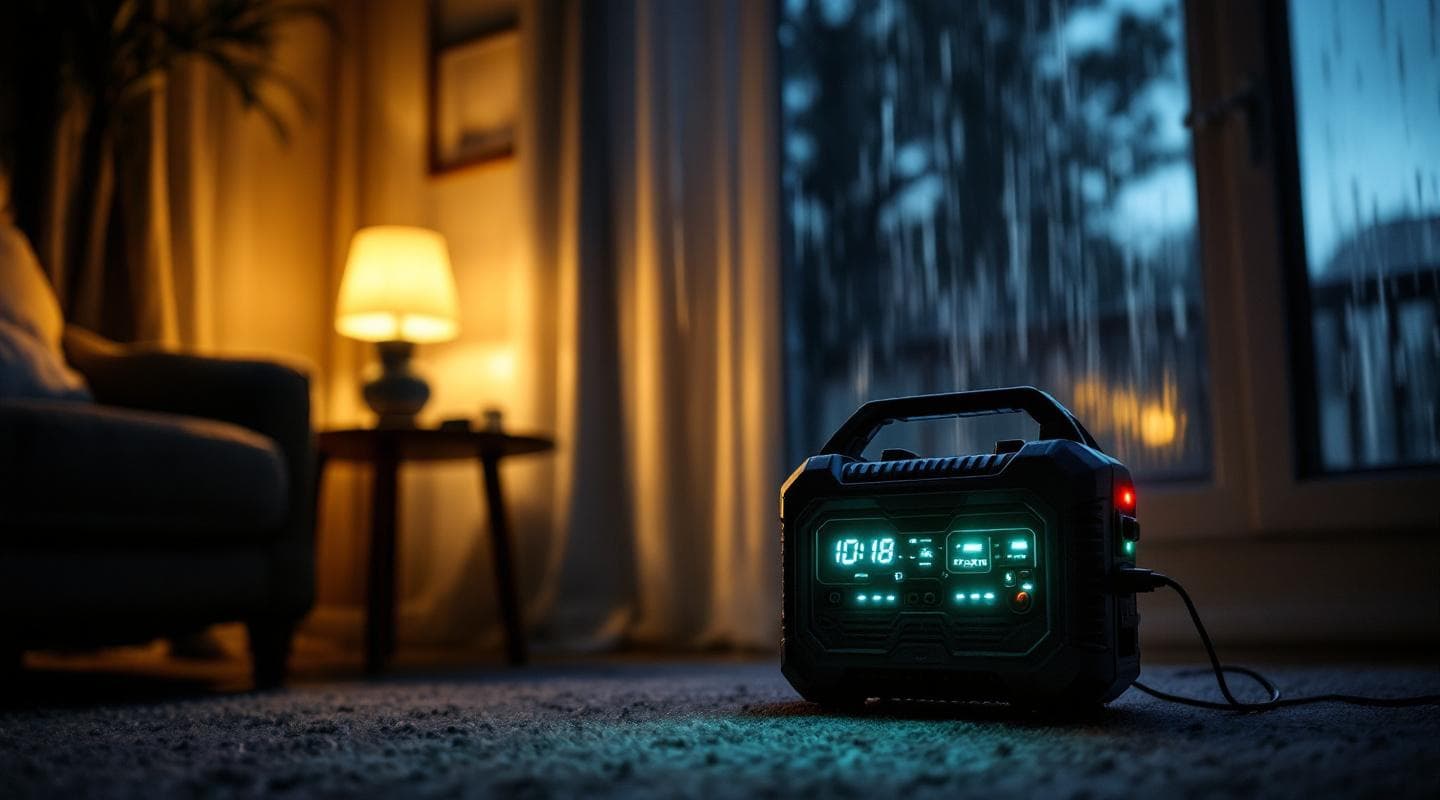
Portable power station providing light during a home power outage

When the Grid Goes Down

Your fridge. Your lights. Your CPAP. The right capacity estimate matters before the lights go out.

Browse Home Backup Stations →

Whole-Home Emergency: When a Day Without Power Has Real Stakes

Last March, someone on r/prepping posted about their mother in Hawaii losing power for over 12 hours. She threw out fridge and freezer food and sat in the dark. The post asked for real recommendations. The community reply was specific: to keep a full-size fridge running and power lights, fans, and a laptop for a day or two, you may need 2kWh or more plus enough surge capacity for the compressor. Smaller units can still work for lights, phones, routers, and shorter appliance runs.

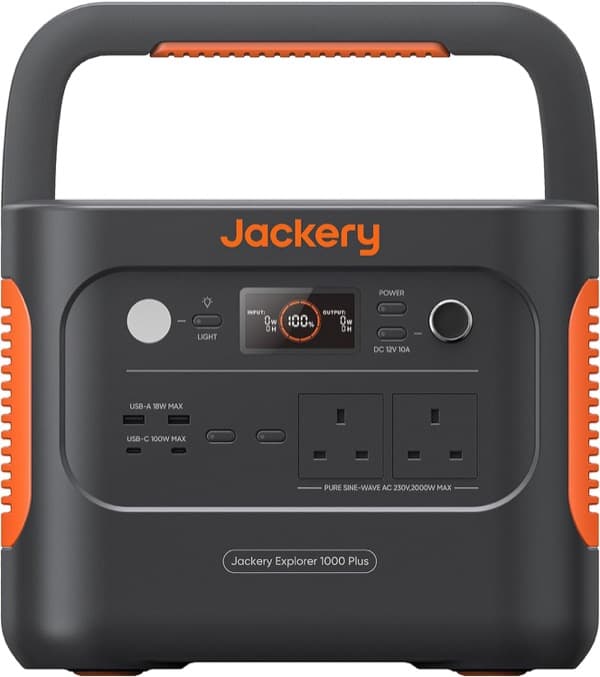
The Jackery Explorer 1000 Plus bridges the gap between weekend backup and full whole-home deployment. 1264Wh expandable to 5kWh with optional battery modules. 2000W continuous. The expandability matters: you can start here and add capacity later rather than buying more than you currently need.

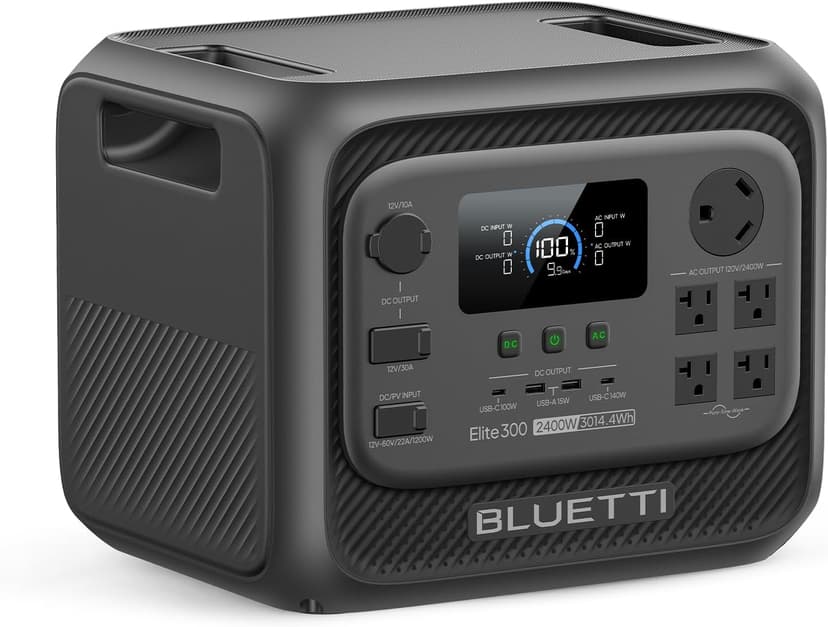
The BLUETTI Elite 300 is the largest capacity unit in this guide. It lists 3014Wh capacity, 2400W continuous output, 4800W peak output, and a TT-30 RV port. Bluetti describes it as the world's smallest 3kWh unit by volume; because that is a brand claim, we would verify dimensions against alternatives before treating it as decisive. Reviewers gave positive notes to power output and app experience, while also noting expected inverter losses under load.

Solar pairing minimum at this tier: 400W of panels. The community response from u/Alaskanarrowusa on r/prepping suggested at least 400W of solar panels. That is a useful community rule of thumb, not a universal requirement. Without some way to recharge, large stations are still finite batteries.

MPPT solar charge controllers can harvest more energy than simpler PWM controllers, especially when panel voltage, temperature, and light conditions vary. At this tier, check the published solar input wattage, voltage range, connector type, and whether the station accepts third-party panels.

Tania covers more home tech and preparedness gear on this site, including red light therapy devices.

Physics Check

LiFePO4 packs generally weigh more per Wh than NMC packs. If an Amazon listing claims 1kWh of LiFePO4 capacity at an unusually low weight, treat it as a prompt to verify the chemistry, cell count, and rated Wh in the manual. Weight alone does not prove fraud, but it can reveal specs that deserve a second look.

What People Are Actually Saying

r/prepping · 19 upvotes

“Last week my mom in Hawaii lost power for over 12 hours (again). She had to throw out a bunch of fridge and freezer food and sit in the dark with no lights or AC. I need a reliable portable power station that can keep a full-size fridge and freezer running and have good solar input for recharging.”

r/camping · 57 replies

“I'm a complete energy storage newbie and just starting tent camping this year. I've googled a bit: Jackery, EcoFlow, Bluetti, LiFePO4 batteries. The Bluetti Elite 300 has pretty low idle consumption which seems perfect for camping. But I don't know the actual real-world usage of these brands at all… I'm kinda stuck and not sure which one to go with.”

r/camping · 28 upvotes · Skeptic

“Honestly, unless you're going on trips lasting multiple weeks, a cooler and small power bank is plenty. I charge my headlamp before a trip and it lasts weeks, my phone is the only thing that dies (I use it for music) and the power bank charges it fine.”

r/prepping · 6 upvotes · Community expert

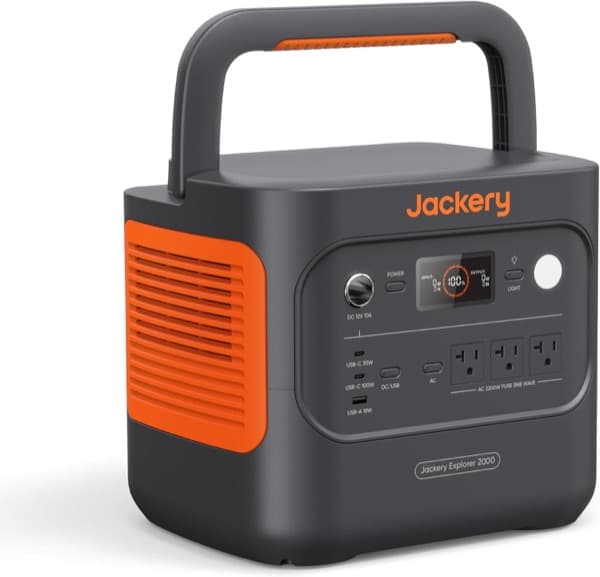
“To keep a full-size fridge and a small AC running for a day or two you need at least 2kWh capacity and a high surge rating. EcoFlow DELTA Pro 3 has 4000W output and fast solar charging, perfect for Hawaii. Bluetti AC200L is more plug-and-play if your mom is not tech-savvy. Jackery Explorer 2000 Plus is extremely quiet. Three options you can't really go wrong with. Just make sure she has at least 400W of solar panels, otherwise once that 2kWh is gone, you're back in the dark.”

Serious Infrastructure: The F3800 Plus

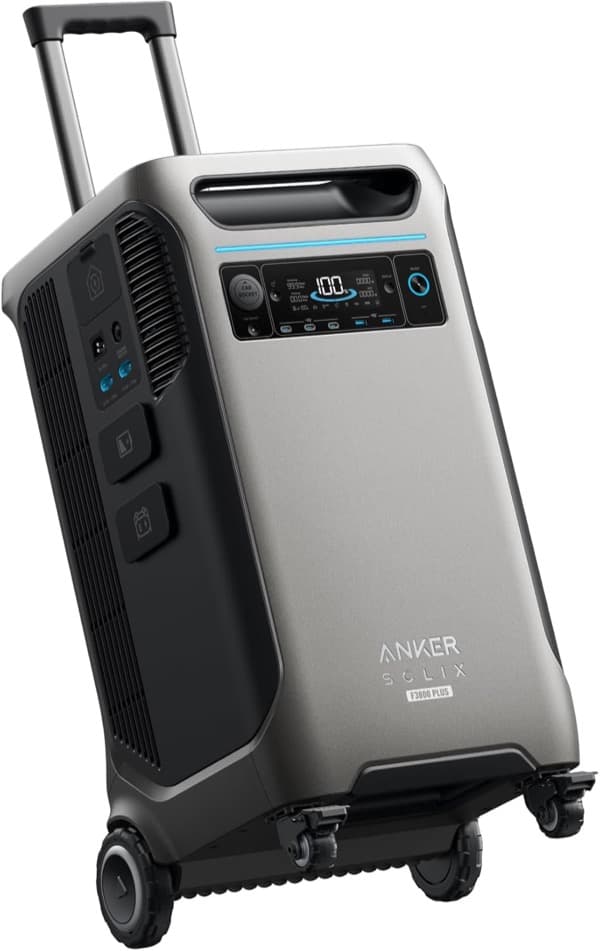
Most people reading this page do not need the Anker SOLIX F3800 Plus. If you are asking whether you do, you probably do not.

The F3800 Plus is for people considering larger backup systems, solar input, EV charging, or 120V/240V split-phase output. Those use cases may require additional batteries, transfer equipment, and a qualified electrician. Its published specs list 3840Wh base capacity, 6000W output, and expandable capacity with additional battery modules.

At this price tier, compare it with fixed home-battery quotes, inlet or transfer switch requirements, local electrical rules, and whether you actually need 240V output. This is not the casual camping tier.

High solar-input capacity only matters if your panel array, wiring, voltage range, weather, and installation plan support it. Read the manual before buying panels, and do not improvise home wiring.

Anker SOLIX F3800 Plus

Anker SOLIX F3800 Plus

Anker

Capacity3840Wh
Output6000W
Weight28.6kg
$2299Amazon

Long-Game Math

A 3,000-cycle LiFePO4 rating equals about 8.2 years at one full cycle per day in simple math. At three full cycles a week, the cycle count stretches much longer. Calendar aging, storage temperature, charge limits, and electronics lifespan can shorten the real-world useful life.

The chemistry that makes LiFePO4 heavier is also part of why buyers like it for backup gear they expect to keep for years. Treat long cycle-life claims as one input, not a promise that every component will last decades.

What the Community Recommends

The pattern across the community threads we reviewed is consistent: buy for a realistic hard day, not your average Tuesday. The people who regret their purchase almost always bought for typical use and then faced an atypical event.

A 400W-ish solar array keeps coming up for larger emergency setups. It does not make power unlimited, but it can turn a single-charge battery into a system that recovers some capacity during daylight.

App monitoring can be genuinely useful during an outage. Knowing whether you have 4 hours or 14 hours of capacity left, from a phone screen in the dark, stops being a marketing feature after your first real outage. Anker's app quality appears positively across verified reviews at multiple price points. Bluetti and Anker both receive strong app reviews from buyers who have used multiple brands.

The skeptics are right sometimes. A cooler and power bank can cover a two-night camping trip for most people. u/MyloWilliams said it accurately. A small power station can cover phone charging and LED lighting. The question is whether your use case goes beyond that.

Current Deals and Coverage

Updates

Anker SOLIX C1000 Gen 2 at 46% Off: Why This Price Point Actually Matters

At publication, the C1000 Gen 2 was listed around $428.99 in the deal coverage we reviewed. That made it unusually competitive for a 1024Wh LiFePO4 station, but prices move quickly and Amazon listings can change without notice.

Kotaku and Android Authority both covered the price drop. We treat that as useful deal context, not as proof that the unit is right for every reader.

For context: 1024Wh can be enough for a few hours of appliance backup or a weekend of light electronics, depending on actual draw. Check your own wattage before buying for a fridge, CPAP machine, router, or medical-adjacent device.

Sources: Kotaku, Android Authority

Before You Buy: What to Check on Every Listing

These four patterns kept showing up when we cross-referenced Amazon listings with independent testing data, UL certification databases, and battery chemistry specifications. Each one appeared in listings that otherwise looked legitimate. Check these before you add anything to your cart.

Peak watts in the headline, continuous watts buried

A 2000W peak / 600W continuous unit cannot run a microwave. A 1500W microwave needs 1500W continuous. If a listing leads with peak watts but the continuous rating is hard to find, scroll to the spec table and check before buying.

“CE certified” on a North American product

A CE mark alone is not the same as a North American NRTL safety listing. UL 2743 and equivalent listings are easier to verify through a third-party certification body. CPSC guidance is clear that lithium batteries should be used and charged according to the manufacturer's instructions and safety markings.

LiFePO4 + under 8 kg at 1kWh capacity

LiFePO4 packs generally weigh more than NMC at equal capacity. If a listing claims 1kWh of LiFePO4 capacity at a surprisingly low weight, double-check the chemistry, rated Wh, and manual before purchasing.

No solar voltage range or MPPT confirmation

Budget units often use PWM controllers that capture 10-30% less solar power than MPPT controllers. If the listing does not mention MPPT or the solar input voltage range, it is worth asking the seller to confirm. At the $429+ tier, MPPT is standard. Below that, verify before you buy.

A note on links

This is how Unicorns On Clouds earns money.

Product links on this page use the Amazon affiliate tag empire880100-20. If you buy through one of them, we earn a small commission at no extra cost to you. That supports the research, writing, and infrastructure behind this page.

Sources

  1. Anker SOLIX C1000 Gen 2 Portable Power Station Hits an All-Time Low at 46% Off Kotaku, April 15, 2026
  2. Anker SOLIX C1000 Gen 2 Portable Power Station on sale for only 7 more hours Android Authority, April 9, 2026
  3. Bluetti Elite 300 portable power station review: A serious step-up in power TechRadar, March 26, 2026
  4. 6 Bestselling Portable Power Stations for Spring The Gadgeteer, April 9, 2026
  5. Best Portable Power Station Recommendations in 2026 (community thread) Reddit r/prepping, March 17, 2026
  6. Portable Power Station for Camping? (community thread) Reddit r/camping, March 24, 2026
  7. LiFePO4 battery chemistry and thermal stability Battery University, 2025
  8. Solar charge controllers Victron Energy, 2025
  9. CPSC lithium-ion battery shopping and use safety reminder CPSC, 2013
  10. Portable power pack testing and UL 2743 UL Solutions, 2026
  11. CE marking requirements European Union / Your Europe, 2026
Tania Chinfatt

Tania Chinfatt

Editor, Unicorns On Clouds

Product researcher focused on precise, spec-verified recommendations. Reads the manual so you do not have to. Meet the team →