As an Amazon Associate I earn from qualifying purchases. Some product links on this page are affiliate links; if you buy through them, we may earn a small commission at no extra cost to you. We also partner with Kala Red Light Therapy via their affiliate program.
Red light therapy showed up on my radar the way most wellness trends do: a friend mentioned it at dinner, then I saw it on NPR, then three more people asked me about it in the same week. Something was happening. So I did what I always do when the noise gets loud enough: I read everything.
Twenty thousand opinions across Reddit, X, Amazon reviews, and skincare forums. Fourteen clinical studies. Trade publications. Independent testers who take $2,000 spectroradiometers to panels the way car reviewers take dynamometers to engines. I talked to people who have been standing in front of these panels for months, not days. Some loved it. One woman on Houzz used hers for eight months and saw nothing. Both stories matter.
The science behind red light therapy traces back further than TikTok. NASA studied red and near-infrared light in the late 1990s for plant growth experiments aboard the Space Shuttle. Researchers noticed that wounds on the crew healed faster during these tests. That observation launched three decades of photobiomodulation research, a field with over 6,000 published papers. The U.S. Navy picked it up next.
Fun Fact — Navy SEALs in early red light trials healed wounds 40% faster than normal. The Department of Defense now issues red light devices to Special Forces units and submarine crews as standard field equipment.
The mechanism is specific: red light at 660nm and near-infrared light at 830-850nm gets absorbed by cytochrome c oxidase, an enzyme in your mitochondria. This boosts ATP production, which drives cellular repair and collagen synthesis. A NIH-supported study found that participants using 630-660nm light for 12 minutes twice per week saw a 40% reduction in eye wrinkle depth after three months. The University of Alabama at Birmingham just published findings on red light improving sleep quality.
That is the science. Here is the problem with buying one.
Independent testers using spectroradiometers consistently find that manufacturer irradiance claims are inflated by 40 to 70 percent. The number on the box is not the number you get.
Most brands measure irradiance using solar power meters at contact distance, with cold panels. Professional testing uses spectroradiometers at 12 inches, after the device has warmed up for 15 minutes. The gap between those two measurements is the gap between marketing and reality. A panel advertising 100 mW/cm² might deliver 40 mW/cm² at treatment distance. That panel still works for skin treatments. It just takes 2.5 times longer per session than the label implies. Outliyr's independent testing methodology documents this gap across dozens of devices.
That finding reshaped this entire article. Instead of ranking panels by advertised specs, I built a scorecard based on what actually separates good devices from bad ones.
Our Top Pick
Kala Pro Panel
FDA Class II. Half-body coverage. 15% off with our link.
What Actually Matters When Buying a Red Light Therapy Device
This scorecard is built from professional evaluation criteria, independent testing protocols, and FDA guidance documents. Use it when shopping. A solid mid-range device scores 55 to 70 out of 100.
Criterion
Weight
What a 10 looks like
Irradiance at treatment distance
25
50-120 mW/cm² at 12″ verified by third-party spectroradiometer
Wavelength accuracy
20
Dual 660nm + 850nm confirmed within ±10nm by spectroradiometer
Safety certifications
15
FDA 510(k) cleared, ETL/UL listed, FCC compliant
Build quality & thermal management
12
Aluminum housing, active cooling fans, stable output after 30 min
EMF & flicker safety
10
Under 1 mG at 12″, flicker-free per IEEE 1789-2015
Coverage & uniformity
8
Half-body or larger, uniformity ratio above 0.8 across treatment area
Transparency
5
Published third-party test reports with methodology
Value (performance per dollar)
5
Irradiance/dollar ratio competitive with clinical panels
Total
100
Good mid-range = 55-70
Red flags (walk away):No listed wavelength specs. “FDA approved” claims (FDA does not approve RLT devices; it clears them). Peak wattage prominently featured but irradiance buried or missing. No brand website outside Amazon.
Fun Fact — Any brand claiming “zero EMF” is telling you they do not understand their own product. Every electronic device produces electromagnetic fields. It is physics, not a design choice. A panel can have low EMF. It cannot have zero. If they get that wrong, what else are they getting wrong?
Our Partner
Kala Red Light Therapy
FDA Class II Medical Device. Trusted by NHL teams and Team Canada.
Exclusive: 15% off all Kala purchases (including sale items!) through our link.
We started with over 40 devices across Amazon, brand stores, and clinical suppliers. After filtering by the scorecard criteria above, cross-referencing reviews, and checking certifications, this is what survived.
Kala leads this list because they are one of the few brands that hold both FDA 510(k) clearance and Health Canada approval for their specific devices. They publish their wavelength and irradiance data. Professional sports teams use them. The 15% discount through our affiliate link makes the price more accessible, but even at full retail these panels compete with clinical devices that cost twice as much.
Three tiers. Premium for serious users who want full-body clinical coverage. Mid-range for people who want real results without the four-figure commitment. And targeted devices for specific needs: face, scalp, spot treatment. Each earns its spot for different reasons.
15% off with our link
Full Body
Kala Elite Panel
Three-quarter body coverage. FDA Class II. Dragon's Den featured. The panel serious users graduate to.
Kala makes clinical-grade devices at clinical-grade prices. Not everyone needs that. If you are testing whether red light therapy fits your life before committing to a $600+ panel, Amazon has a deep bench of alternatives that start under $70.
The trade-offs are predictable. Budget devices use single-chip LEDs instead of dual-chip, which means lower irradiance per LED and longer session times. Most lack FDA clearance. Build quality varies. But for someone asking "will I actually use this three times a week?" a $68 lamp answers that question at very low financial risk.
Fun Fact — The first Nobel Prize connected to light therapy was awarded in 1903. Danish physician Niels Finsen won it for treating lupus vulgaris with concentrated light. Red light therapy is not a wellness fad. It is a 120-year-old medical principle with modern LEDs.
Amazon's 30-day return policy also removes the commitment anxiety. Try a device. Use it for two weeks. If you feel nothing, return it. If you feel something, you now know the category is worth investing in, and you can decide whether to upgrade to Kala or stay with what works.
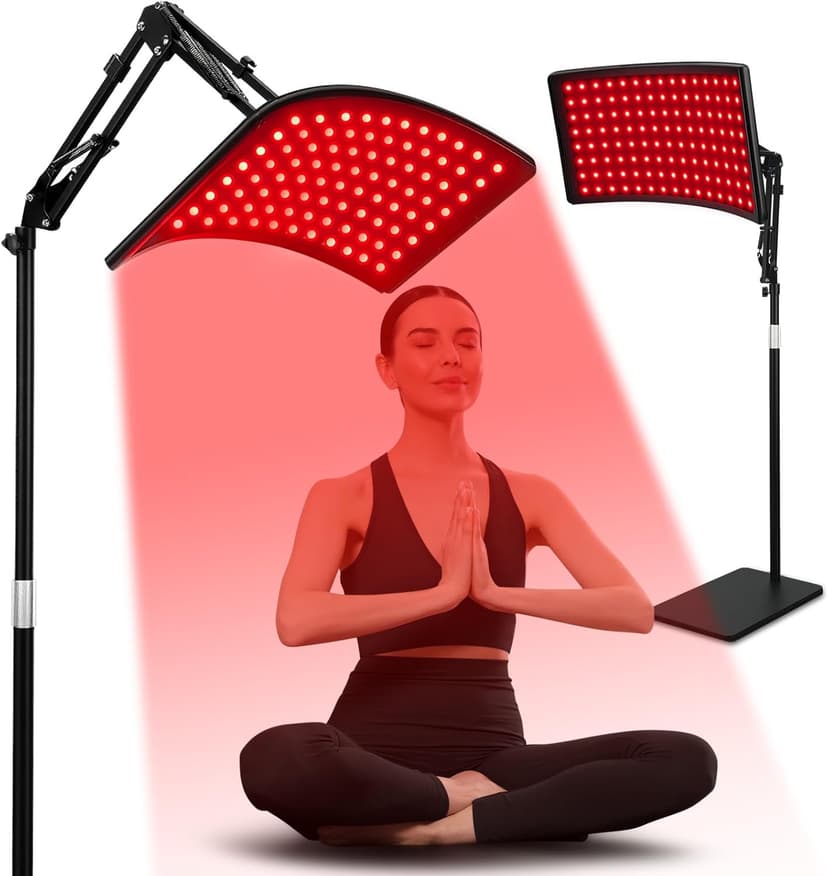
Below are the Amazon devices we researched. Panels for half-body and full-body coverage, a wearable wrap for targeted pain relief, a foot pad for neuropathy, and a compact nasal device. All ship with Prime.
Amazon Alternatives
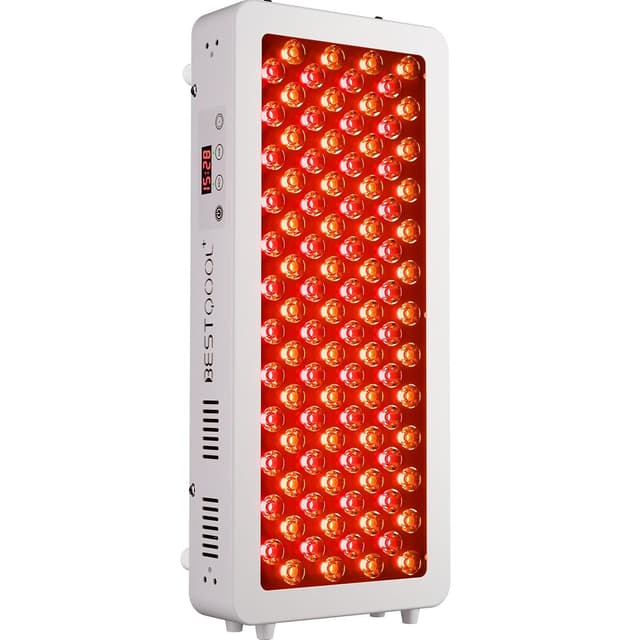
BestQool
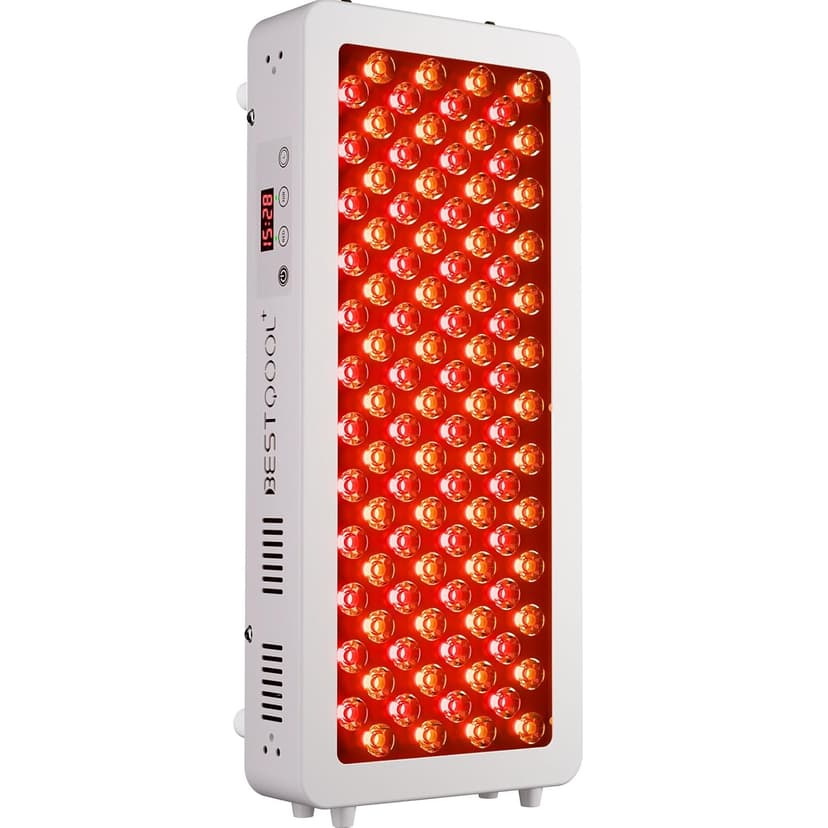
BestQool 4-Wavelength Panel
170W, 100 dual-chip LEDs. 4.7 stars, 444 reviews. Mid-range panel that punches above its price.
There are hundreds more red light therapy devices on Amazon. Panels, belts, masks, wands, foot pads. These are the ones we researched, but explore the full range if none of these fit your needs.
One pattern kept showing up across every forum, every review thread, every before-and-after post we analyzed: the people who see the fastest results are not the ones with the most expensive panels. They are the ones who pair their device with a routine.
The logic is straightforward. Red light at 660nm stimulates collagen production in the dermis. An activation serum applied before the session gives the skin hydration and peptides to work with during that stimulation window. Collagen peptides taken orally provide the amino acid building blocks from the inside. You are feeding the process from both directions.
Eye protection is the one non-negotiable accessory. Red and near-infrared light at therapeutic irradiance levels can cause retinal damage with prolonged direct exposure. Every clinical protocol requires eye protection. Every manufacturer recommends it. Do not skip it to save ten dollars.
Below are the accessories that showed up most often in the routines of people reporting real results. Nothing exotic. Goggles, a pre-treatment serum, and a collagen supplement. Small additions that compound over weeks.
Complete Your Setup
Eye Protection
RLT Safety Goggles (2-pack)
Required eye protection. Fits over glasses. Not optional.
The conversation around red light therapy splits into two camps, and the split itself is the most useful thing about it. People who see results tend to see them between four and eight weeks. People who do not see results tend to quit before that window or use devices with inadequate irradiance for their goals.
“alright I was on Reddit looking at ppl's red light therapy results & idk but I'm sold.”
“Red light therapy: Six minutes a day and you can be doing your morning routine as you wear it. A study on 44 males showed that treatment with 655nm laser cap every other day for 16 weeks resulted in a 39% increase in hair growth compared to placebo.”
“I tried one also for about 8-9 months & my experience was the same -- no difference at all. I switched to Tretinoin instead, which I've been using for 1.5 years and am satisfied with.”
“I have had two Red Light Therapy sessions of 25 minutes each and I am already amazed with the results. The sagging skin and cellulite on my upper arms have disappeared. A small scar on my face is almost gone.”
The Art of Manliness three-month trial reported improved skin texture and reduced joint stiffness. The writer was upfront that changes were gradual and subtle, not dramatic overnight transformations. That tracks with the research: published studies show statistically significant results at 8 to 12 weeks of consistent use.
Across Amazon, BestQool's 4-wavelength panel carries a 4.7-star average from 444 reviews. The top praise: build quality, portability, and ease of use. The reviews that score three stars tend to mention unrealistic expectations about speed of results. Nobody in 444 reviews reported safety issues.
One pattern worth noting: the people getting the best results are pairing their panels with a skincare routine. An activation serum before the session, collagen supplementation for internal support, and consistency matter more than buying the most expensive panel.
The Bottom Line
Red light therapy is not magic. It is photobiology with three decades of published evidence and specific mechanisms of action. The devices work, within the constraints of what the wavelengths can physically do. The industry has a spec inflation problem that makes comparison shopping harder than it should be. The buyer's scorecard above exists because the labels cannot be trusted at face value.
If you are buying your first device, the Viconor lamp at $68 is a low-risk way to test whether you will actually use it three to five times per week. If you already know you want a serious panel, the BestQool at $319 delivers the best value per milliwatt. If you want clinical-grade coverage and have the budget, the Kala Elite at $1,224 is an FDA Class II Medical Device with the certifications to prove it.
Whatever you buy, get the goggles. Your eyes are not optional.
A small note on links
This is how Unicorns On Clouds earns money.
Some product links on this page are affiliate links. If you buy through one of them, we may earn a small commission at no extra cost to you.
That support lets us keep listening, researching, comparing real opinions, and turning product noise into stories that are actually useful. Thank you for using our links when they help you find something worth buying.
Product images on this page are courtesy of the brands featured. We use them for editorial review purposes under fair use. Visit their stores to explore the full product range.